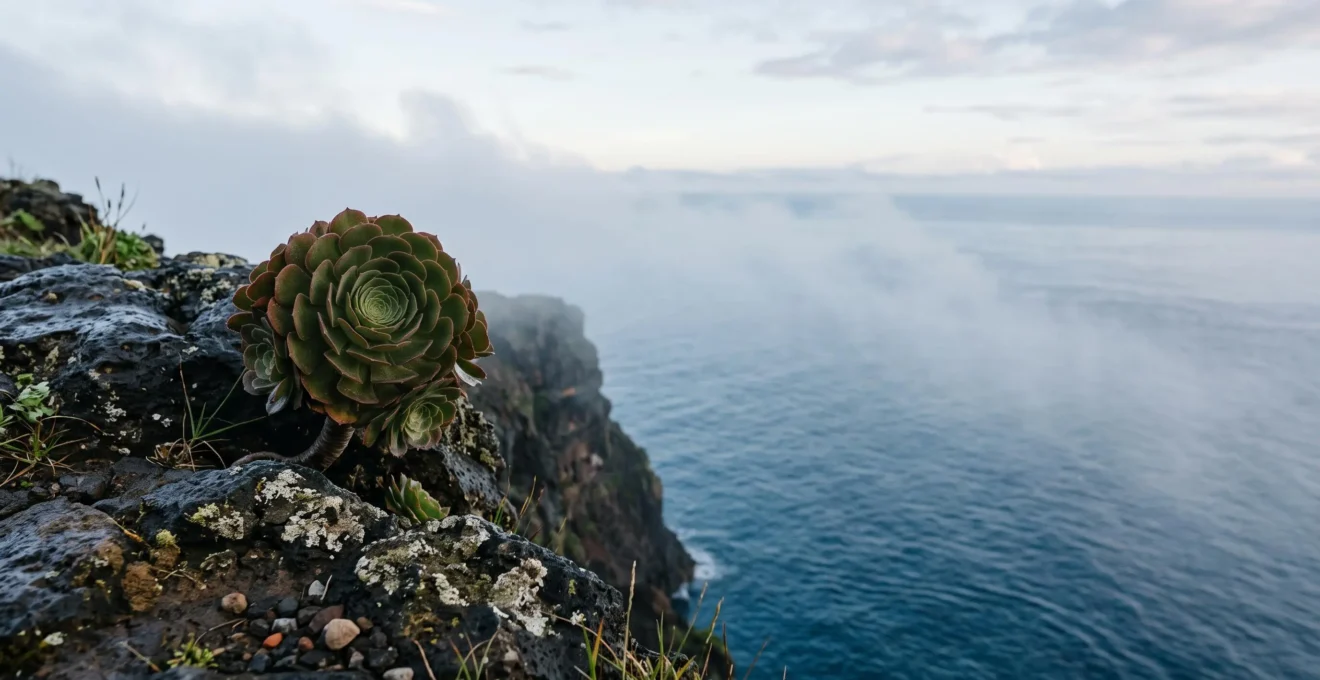
True responsible travel isn’t about the rules you follow, but the ecological consequences you understand; the greatest threats to unique island species are often invisible.
- Island isolation creates “evolutionary laboratories,” but these unique ecosystems are extremely vulnerable to external disruption.
- As travellers, our gear can unknowingly become a vector for invasive seeds, and even small deviations from trails can cause permanent damage to fragile vegetation.
Recommendation: Shift from being a passive tourist to an active ecological guardian by learning to see the invisible threats and adopting strict biosecurity practices on every journey.
The first time you see a plant that exists only on one tiny speck of land in the middle of an ocean, you feel a sense of profound wonder. It’s a connection to a place in its purest form, a living testament to evolution’s creative power. For eco-conscious travellers, these encounters are the pinnacle of a meaningful journey. We arrive armed with good intentions and the common wisdom of responsible tourism: pack out what you pack in, stay on the designated trails, and respect the wildlife. These rules are the essential foundation of ethical exploration.
But what if the greatest dangers to these fragile worlds are the ones we cannot see? What if, despite our best efforts, we are unknowingly carrying the agents of destruction on the soles of our boots or in the weave of our socks? The conventional advice, while crucial, often overlooks the subtle, almost invisible, ecological dynamics that govern these unique island ecosystems. The real threat isn’t always a dropped plastic bottle; it can be a microscopic seed from a different continent or the almost imperceptible compaction of soil from a single misplaced footstep.
This is where we must go deeper. The key to true conservation-first travel lies not in blindly following a checklist, but in understanding the *why* behind the rules. This guide moves beyond the basics to reveal the hidden science of island ecology. We will explore how these evolutionary laboratories came to be, the unseen ways in which we can disrupt them, and how to transform our presence from a potential threat into a force for preservation. By understanding the profound consequences of our actions, we can become the informed, respectful partners these unique places desperately need.
Summary: A Conservationist’s Guide to Navigating Fragile Island Ecosystems
- Why Island Isolation Created Evolutionary Laboratories Producing Unique Species
- How to Explore Biosphere Reserves Following Leave No Trace Principles
- Guided Ecological Tours vs Independent Exploration: Which Protects Habitats Better?
- When to Visit Endemic Species Breeding Zones Without Disturbing Natural Cycles
- The Trail Shortcut Error That Damages Protected Vegetation Zones
- Why Ice Ages Eliminated Laurel Forests Everywhere Except Oceanic Islands
- Why UNESCO and EU Designations Layer Multiple Protection Levels
- Why 45% of Island Territory Holds Protected Status Under Spanish Law
Why Island Isolation Created Evolutionary Laboratories Producing Unique Species
Islands are not just land surrounded by water; they are Earth’s great evolutionary laboratories. When a single species arrives on an isolated shore—a seed carried by wind, a bird blown off course—it enters an environment with new opportunities and few competitors. This is the starting point for a process called adaptive radiation. Over millennia, that single ancestor can diversify into a multitude of new species, each exquisitely adapted to a specific niche. This is why we see such a dazzling array of unique life forms, or endemics, on islands. They are the living products of time, isolation, and opportunity.
However, this magnificent evolutionary story is also one of extreme vulnerability. The very isolation that fosters uniqueness also leaves these species with few defences against outside threats. As travellers, we can unwittingly become a powerful vector of dispersal for invasive species. A landmark study on hiker-borne seed dispersal revealed that up to 1.9 million plant seeds could be carried on walkers’ socks in a single hiking season in just one alpine park. As Professor James Bullock from the Centre for Ecology & Hydrology notes, with thousands of visitors, “there’s a lot of potential for accidental seed dispersal.” One foreign seed sprouting in this balanced world can outcompete native plants, disrupt food webs, and begin to unravel millions of years of evolution.
How to Explore Biosphere Reserves Following Leave No Trace Principles
The “Leave No Trace” philosophy is a powerful starting point for ethical exploration, but in sensitive biosphere reserves, we must elevate this principle to a professional standard known as biosecurity. This means actively preventing the introduction and spread of non-native organisms. It’s about recognizing that our clothes, shoes, and gear are potential carriers of biological contaminants. The devastating impact of ignoring this is clear in places like Thailand’s Maya Bay. Made famous by social media, the bay was overwhelmed by over 5,000 daily visitors, leading to severe coral reef destruction and its eventual closure. This cautionary tale shows how quickly a fragile ecosystem can be loved to death.
To avoid this, we must adopt a proactive mindset. Before entering a protected area, and again after leaving, all equipment must be meticulously cleaned. This isn’t just about mud; it’s about the invisible seeds, fungal spores, and microscopic organisms that can cling to fabric and boot treads. Think of yourself as a surgeon entering an operating theatre—sterility is paramount to prevent infection. This level of diligence ensures the ecological integrity of the reserve remains intact for future generations of both humans and its native inhabitants.
Your Biosecurity Action Plan: Preventing Invasive Species Spread
- Scout and Report: Use plant identification apps to learn about local invasive species before your visit. If you spot them, report the sightings to park authorities.
- Arrive Clean, Leave Clean: Cleaning shoes, clothing, and all outdoor equipment before and after your trip is the single most effective way to stop the spread of invasive seeds and pathogens.
- Choose Gear Wisely: Opt for clothing and gear made from smooth, tightly woven fabrics that are less likely to trap and transport seeds, burrs, and insects.
Guided Ecological Tours vs Independent Exploration: Which Protects Habitats Better?
The choice between joining a guided tour and exploring independently is a critical one for the conservation-minded traveller. There is no single right answer, as both options have potential benefits and drawbacks for habitat protection. A reputable guided ecological tour offers significant advantages. Guides are trained to recognize sensitive areas, interpret animal behaviour, and enforce rules. They act as a buffer between tourists and the environment, ensuring visitors keep a respectful distance and stay on designated paths. Furthermore, tour fees often directly fund conservation projects and local jobs, creating a positive feedback loop where tourism supports the ecosystem it depends on.
However, guided tours can also lead to the “honey pot” effect, concentrating human impact in a few well-trodden areas. On the other hand, independent exploration allows for dispersal of visitors, potentially reducing pressure on specific sites. It fosters a deeper sense of personal discovery and responsibility. The danger, of course, is that without expert oversight, an uninformed independent explorer is far more likely to make critical errors: misinterpreting an animal’s stress signals, accidentally trampling rare flora, or taking an ill-advised shortcut. The best approach often depends on the specific ecosystem’s fragility and the traveller’s own level of ecological literacy. For the most sensitive areas, a guided tour is almost always the more responsible choice. For more resilient landscapes, a well-prepared, educated independent traveller can explore with minimal impact.
When to Visit Endemic Species Breeding Zones Without Disturbing Natural Cycles
Timing is everything in nature, especially when it comes to the delicate cycles of breeding, nesting, and raising young. For endemic species, these periods are moments of heightened vulnerability, and human disturbance can have catastrophic consequences. A bird frightened from its nest may abandon its eggs, leaving them to cool or be taken by predators. The presence of humans can cause immense stress to a mother nursing her young, forcing her to expend precious energy or move her offspring to a less safe location. The key to responsible visitation is to be an unobtrusive observer, not an active participant in their world.
The first rule is to do your research. Protected areas and national parks almost always publish seasonal calendars and guidelines indicating when and where breeding occurs. These are not suggestions; they are critical conservation tools. Adhering to them is non-negotiable. Often, entire zones will be closed to the public during these sensitive times. If an area is open, the responsibility falls on you. Use binoculars or a long camera lens to maintain a significant distance—if an animal changes its behaviour because of you, you are too close. Learn to recognize signs of stress: a bird making repeated alarm calls, a mammal with its head held high in a state of hyper-vigilance. The most ethical encounter is one where the animal is completely unaware of your presence, allowing its natural cycles to continue undisturbed.
The Trail Shortcut Error That Damages Protected Vegetation Zones
The temptation of a trail shortcut is a familiar one—a desire to save a few minutes or avoid a muddy patch. But from an ecological perspective, this seemingly small act is one of the most destructive behaviours in a protected area. As a recreation ecologist noted for PBS NewsHour, “Overcrowding in outdoor spaces has many harmful effects, from degrading trails to accelerating the introduction and spread of invasive plants.” When you step off the path, you are initiating a cascade of damage. The initial impact is soil compaction. Fragile, airy soil is crushed, reducing its ability to hold water and oxygen, which is vital for plant roots and the subterranean ecosystem.
Once soil is compacted, it creates a hard, impervious surface. Rainwater can no longer soak in; instead, it runs off, creating small channels of erosion that grow with each storm. Worse still, your single set of footprints signals to others that this is an acceptable route. Soon, one shortcut becomes a “social trail,” a barren scar across the landscape where native vegetation has been trampled and destroyed. These unique, slow-growing endemic plants, which may have taken decades to establish, can be wiped out in a single season of foot traffic. Staying on the trail isn’t about obedience; it’s a conscious act to prevent the unravelling of the entire ground-level ecosystem.
Why Ice Ages Eliminated Laurel Forests Everywhere Except Oceanic Islands
Walking through a laurel forest on an island like La Gomera or Madeira is like stepping back in time. The misty, gnarled trees covered in moss are living relics of a world that has otherwise vanished. These forests are a “Tethyan relictual flora,” meaning they are remnants of a type of subtropical forest that covered much of the Mediterranean basin millions of years ago, during the Tertiary period. When the ice ages began, continental glaciers advanced and the climate grew colder and drier, wiping out these forests from Europe and North Africa. But on oceanic islands, something magical happened.
The ocean acted as a massive climate moderator, buffering the islands from the extreme temperature swings that plagued the continents. These islands became climate refuges. As a study in the Journal of Ecology explains, the laurel forests that had once colonized these islands from the mainland were able to survive there while their continental relatives went extinct. Today, places like Garajonay National Park in the Canary Islands are a testament to this history. UNESCO notes that laurel forest covers some 70% of this park, preserving a window into a prehistoric world. These forests aren’t just old; they are survivors, a direct link to a planet that existed before the ice.
Why UNESCO and EU Designations Layer Multiple Protection Levels
When you see a protected area marked as a UNESCO World Heritage Site, a Biosphere Reserve, and also falling under EU directives like Natura 2000, it can seem like a confusing overlap of labels. However, from a conservation biologist’s perspective, this is a beautifully robust system of layered protection. Each designation serves a different but complementary purpose, creating a stronger safety net for the ecosystem. A UNESCO designation is primarily about recognizing “Outstanding Universal Value.” It’s a global seal of significance, a declaration to the world that this place is irreplaceable for all of humanity, but it doesn’t always come with strong legal teeth on its own.
This is where regional and national laws become critical. For islands within the European Union, designations like the Natura 2000 network are legally binding. They are not just honorary titles; they are management tools that require member states to protect specific habitats and species listed in the Habitats and Birds Directives. This layer provides the legal framework for active conservation. Finally, national and regional laws are the on-the-ground implementation of these higher-level commitments. They define the specific boundaries of a national park, set the rules for visitors, and fund the rangers who enforce them. Together, these layers—global recognition, legal obligation, and local action—create a multi-faceted defence system that is far more resilient than any single designation could be on its own.
Key Takeaways
- Islands function as “evolutionary laboratories,” making their endemic species genetically unique and extremely vulnerable to outside interference.
- Travellers are not just visitors but potential ecological vectors; our gear can transport invasive seeds that threaten to unravel entire native ecosystems.
- Effective conservation relies on layered legal protections, from global UNESCO recognition to binding EU directives and specific national park laws.
Why 45% of Island Territory Holds Protected Status Under Spanish Law
The impressive figure, with official data showing that around 40% of the Canary Islands’ territory is protected, is not an accident of geography but the result of a deliberate, long-term conservation strategy. Spanish law, in concert with EU and global designations, has created a robust framework to safeguard the archipelago’s extraordinary natural heritage. This network includes national parks, biosphere reserves, and marine reserves, each designed to protect different facets of the islands’ biodiversity—from the high-altitude volcanic landscapes to the relict laurel forests and rich marine life. This high percentage of protection reflects a deep understanding that the islands’ ecological health is inextricably linked to their economic and cultural well-being.
Case Study: The Expansion of Los Tilos Biosphere Reserve
The story of the Los Tilos forest on La Palma is a perfect illustration of this evolving protection. Initially a 511-hectare area was protected to safeguard one of the most important laurel forests. However, conservationists and authorities realized that protecting an isolated patch was not enough. To preserve entire ecological processes, like water cycles and wildlife corridors, the protected zone needed to expand. Today, the Los Tilos Biosphere Reserve has grown to encompass 13,420 hectares, demonstrating a shift in conservation philosophy from protecting “hotspots” to managing whole, interconnected landscapes.
This level of protection is a recognition that these islands are not just tourist destinations; they are invaluable reservoirs of global biodiversity. The legal status is the formal expression of a societal commitment to act as stewards for these evolutionary marvels. It ensures that the unique species and habitats that survived ice ages and evolved in isolation have a fighting chance to survive the pressures of the modern world.
By understanding the profound science behind the beauty, you can transform your travels. Each clean boot, each respected boundary, and each informed choice makes you an active partner in preservation. Your next journey can be more than a vacation; it can be a contribution to safeguarding life’s most unique creations.