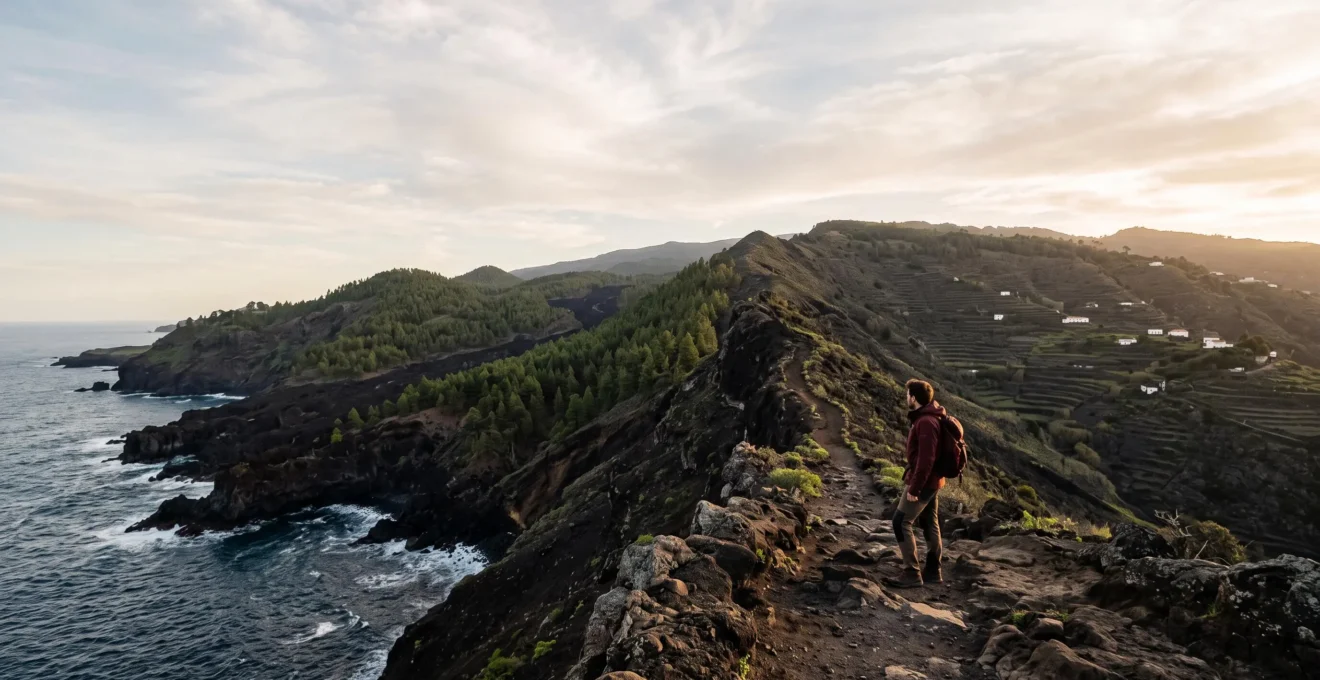
The key to confident and legal access to Spain’s stunning natural parks is not memorizing rules, but understanding the legal and ecological logic behind them.
- Layered laws from Spanish, EU, and UNESCO bodies create a complex but robust framework designed to protect irreplaceable ecosystems.
- Permits and restrictions are not arbitrary barriers; they are essential management tools for safeguarding fragile environments from overuse.
Recommendation: Always research specific zonal regulations and seasonal closures before your visit to transform legal anxiety into informed, respectful exploration.
Standing at the edge of a Spanish national park, it’s easy to feel a mix of awe and anxiety. The raw beauty is undeniable, but so is the intricate web of signs, rules, and potential restrictions. For the conscientious visitor, the primary fear is not of the wild, but of unintentionally breaking a rule you never knew existed. You want to do the right thing, but the path isn’t always clear. Many guides simply advise you to “book in advance” or “check the official website,” platitudes that offer little comfort when faced with complex regulations.
But what if the key wasn’t simply following a list of dos and don’ts, but understanding the fundamental reason—the legal and ecological ‘why’—behind each rule? As a lawyer specializing in protected area access, I can assure you that every regulation, from a hiking permit to a seasonal trail closure, is a chapter in a larger story of conservation. Understanding this story doesn’t just ensure compliance; it transforms your visit from a cautious tiptoe into a confident, deeply connected experience. It’s about shifting your mindset from a fear of fines to a shared sense of stewardship.
This guide is designed to give you that understanding. We will decode the legal frameworks, clarify the purpose of permits, and explain the critical importance of conservation designations. By the end, you won’t just know the rules; you’ll appreciate their vital role in preserving these natural treasures for generations to come.
This article breaks down the essential legal and practical aspects of visiting Spain’s protected areas. The following table of contents outlines the key topics we will cover to provide you with the legal certainty you need for a worry-free exploration.
Summary: A Guide to Navigating Spain’s Protected Natural Areas
- Why UNESCO and EU Designations Layer Multiple Protection Levels
- How to Obtain Required Permits for Restricted Hiking Zones
- Self-Guided Exploration vs Ranger-Led Walks: Which Grants Deeper Park Access?
- The Permit Oversight That Results in £300 Fines for 30% of Trekkers
- When National Parks Enforce Seasonal Closures to Protect Nesting Birds
- How to Explore Biosphere Reserves Following Leave No Trace Principles
- Why Only 6 Atlantic Laurel Forests Met UNESCO’s Strict Universality Criteria
- Why UNESCO Designated These Forests Irreplaceable Planetary Assets in 1999
Why UNESCO and EU Designations Layer Multiple Protection Levels
When you see a sign for a national park that is also a UNESCO World Heritage Site and perhaps a European Union Special Protection Area, it’s not redundancy; it’s a strategy of layered protection. Each designation adds a different legal and financial tool to the conservation toolkit, creating a robust shield for the most vulnerable ecosystems. The Canary Islands, for example, have a network of 146 protected natural areas covering over 40% of their territory, and this complexity is by design.
A Spanish National Park designation provides the foundational legal framework under domestic law. An EU designation, like a Special Area of Conservation, can unlock specific funding for habitat restoration and obliges Spain to meet Europe-wide conservation targets. A UNESCO designation elevates the site to global importance, recognizing its “Outstanding Universal Value” and placing a powerful international spotlight on its preservation. This layering ensures that if one level of protection falters, others remain in place.
Case Study: The Reinforced Defences of Garajonay National Park
Garajonay National Park on La Gomera perfectly illustrates this principle. First declared a national park by Spain in 1981, it was later inscribed on the UNESCO World Heritage List. The regulatory logic was clear: UNESCO recognized that the park’s ancient laurel forest is a relict ecosystem that has vanished from most of the world. By adding the UNESCO status on top of the national one, Spain gained international support and affirmed its commitment to protecting this unique ‘living fossil’ forest, reinforcing its conservation status against future threats.
For a visitor, this means recognizing that you are in a place deemed significant not just locally, but for all of humanity. The rules in place are a direct consequence of this profound international responsibility.
How to Obtain Required Permits for Restricted Hiking Zones
The permit is the most direct interaction most visitors have with the regulatory logic of a national park. It’s not a bureaucratic hurdle designed to frustrate; it is a critical tool for managing human impact on fragile environments. In places of immense popularity and ecological sensitivity, like the summit of Mount Teide, permits are the only way to prevent the landscape from being loved to death. With access to the summit capped at just 200 permit holders daily, the system ensures each visitor can experience the peak without contributing to its degradation.
Securing a permit requires foresight and an understanding of the process. It’s an act of proactive compliance that demonstrates respect for the area. The key is to identify the exact zone you wish to visit, use the official booking platform, and act well in advance, as slots are often booked out weeks or months ahead.
Action Plan: Securing Your Teide Summit Access Permit
- Identify the correct trail code: The summit requires PNT 10 (Telesforo Bravo). Note that as of 2026, the popular approach trail PNT 7 (Montaña Blanca) also requires a separate booking.
- Use the official booking platform: Go to the official Tenerife ON website to reserve your specific date and two-hour time slot for summit access.
- Book well in advance: New availability typically opens on a rolling basis for the coming weeks. Slots for popular times can disappear within minutes.
- Pay any associated fees: From 2026, an eco-fee is required at the time of booking for the summit and its connecting routes to fund conservation.
- Carry required documents: You must present your printed or digital permit along with a valid photo ID (passport or national ID card) at the ranger checkpoint. There are no exceptions.
To help you plan your visit with legal certainty, the following table distinguishes between some of the most popular trails in Teide National Park and their permit requirements. This allows you to choose an experience that matches both your hiking ambitions and your level of advance preparation.
| Trail | Permit Needed? | Difficulty | Highlight |
|---|---|---|---|
| PNT 10 – Telesforo Bravo (Summit) | Yes, mandatory prior reservation | Very hard, steep gradients up to 60% | Reaches the true summit of Teide |
| PNT 7 – Montaña Blanca | Yes, since 2026 | Hard, long ascent | Classic approach route with volcanic scenery |
| Mirador de Pico Viejo | No | Easy, about 30 minutes | Views of a major volcanic crater, freely accessible |
Self-Guided Exploration vs Ranger-Led Walks: Which Grants Deeper Park Access?
Many visitors prize the freedom of self-guided exploration, and for a vast majority of trails in Spain’s national parks, this is a wonderful and permitted way to experience nature. However, when it comes to accessing the most restricted, sensitive, or sought-after areas, a ranger-led or accredited guided walk can be the key that unlocks the gate—both literally and figuratively. As Teide is the most visited national park in Europe, managing access is a paramount concern.
Official guides and park rangers often have block permits or special access rights for the groups they lead. This is your most reliable—and sometimes only—last-minute option for reaching a location like the Teide summit if the public permits are long gone. This isn’t a loophole; it’s part of the management system. The park authorities trust these professionals to lead small, well-managed groups, ensuring compliance with all regulations while providing valuable ecological interpretation.
Beyond just securing a permit, a guided walk provides an invaluable layer of understanding. A good guide is a translator of the landscape, pointing out endemic species, explaining geological formations, and sharing the conservation stories that bring the rules to life. As the professionals at Canarias Nature Guides point out, hiring a guide is about more than just a permit:
Hire a company of guides accredited by the National Park to do a guided hiking activity, including the access permit to the peak, the insurance of the activity and the experience, security and interpretations of the environment provided by our hiking guides.
– Canarias Nature Guides, Canarias Nature Guides blog
Ultimately, the choice depends on your goal. If you seek solitude and freedom on well-marked, open-access trails, self-guided is perfect. But if you want guaranteed entry to a high-demand area and a richer understanding of what you’re seeing, a guided walk offers deeper park access in every sense of the word.
The Permit Oversight That Results in £300 Fines for 30% of Trekkers
While the specific figures for fines can vary by region and violation, the financial and legal risks of a permit oversight are very real and can be substantial. For the rule-following visitor, the anxiety comes from “unknown unknowns”—the rules you aren’t even aware you might be breaking. Beyond the obvious “no permit” violation, a host of other activities, often undertaken innocently, can lead to significant penalties. This is where understanding the broader regulatory framework is crucial.
Common oversights that carry heavy fines often involve activities that seem harmless to the uninformed visitor but have a serious ecological impact. These include:
- Flying a drone: All 15 Spanish national parks prohibit unauthorized drone flights. This is considered a serious infraction, and as one British tourist discovered, penalties for unauthorized drone use in protected zones can reach up to €200,000 in extreme cases. The noise disturbs wildlife and disrupts the sense of tranquility for other visitors.
- Wild camping: Setting up a tent outside a designated, permit-based campsite is strictly illegal. Each island council (`cabildo`) manages its own authorised zones, and camping elsewhere, including on beaches or in forests, is treated as a regulatory violation with fines ranging from administrative penalties to several hundred euros.
- Straying from trails: Stepping off a marked path, even for a photo, can damage fragile vegetation or disturb nesting grounds. These areas are often part of active revegetation projects, and a single footstep can undo years of work.
- Interacting with wildlife: Approaching or, worse, feeding wild animals is a serious offence. It habituates them to humans, which can be dangerous for both the animal and future visitors.
The key takeaway is that park regulations extend far beyond just hiking permits. The legal principle is one of precaution: unless an activity is expressly permitted, you should assume it is forbidden. This mindset is the surest way to avoid the kind of innocent mistake that can ruin a holiday and harm the environment you came to enjoy.
When National Parks Enforce Seasonal Closures to Protect Nesting Birds
A sign announcing a “Trail Closed” for the season can be a source of frustration, but it is rarely an arbitrary decision. More often than not, it is a precise and necessary measure to address an ecological imperative: protecting vulnerable species during critical life stages. The nesting season for endemic or endangered birds is a prime example of why park authorities will temporarily restrict human access to certain areas.
During breeding, birds are extremely sensitive to disturbance. The presence of hikers can cause parent birds to abandon their nests, leaving eggs or chicks exposed to predators or the elements. A single, well-meaning but ill-timed intrusion can lead to the failure of a nest, which, for a species with a small population, is a significant blow to its survival. The closures are a non-negotiable part of the conservation strategy, directly linking visitor management to species recovery.
Case Study: The Gran Canaria Blue Chaffinch Recovery
The Gran Canaria Blue Chaffinch, one of Europe’s rarest birds, was once confined to a single pine forest and teetered on the brink of extinction. An intensive conservation plan, co-financed by the EU LIFE programme, combined predator control with a captive breeding and release program. Crucially, this effort was supported by strict protection of its nesting habitats within the Tamadaba and Inagua pine woods. Thanks to these coordinated actions, which include seasonal access restrictions, conservation efforts have helped the population climb to an estimated 430 birds from a low of around 150. The temporary closure of a trail is a small price to pay for the survival of an entire species.
Therefore, when you encounter a seasonal closure, see it not as a barrier, but as evidence of a successful conservation ecosystem at work. The park is fulfilling its primary legal and moral duty to prioritize the welfare of its most fragile residents. Your compliance is a direct contribution to that success.
How to Explore Biosphere Reserves Following Leave No Trace Principles
Biosphere Reserves, another UNESCO designation found across Spain, represent a different philosophy of conservation. Unlike national parks, which often focus on protecting pristine wilderness, biosphere reserves are designed to be “learning places for sustainable development.” They explicitly include zones where people live and work, seeking to find a harmonious balance between human activity and nature. This makes the adoption of Leave No Trace principles by visitors not just a good idea, but the very essence of the reserve’s purpose.
Exploring a biosphere reserve responsibly means making your presence invisible. The seven principles of Leave No Trace provide a simple, effective framework: plan ahead and prepare, travel and camp on durable surfaces, dispose of waste properly, leave what you find, minimize campfire impacts, respect wildlife, and be considerate of other visitors. In the context of a biosphere reserve, this extends to respecting the local economy and culture as well.
Even a seemingly harmless act, like leaving a banana peel on the trail, has an impact. While biodegradable, it’s not natural to that specific environment, can attract animals and alter their behaviour, and spoils the sense of wildness for others. The goal is to leave the environment exactly as you found it, or better. This philosophy is being scaled up from land to sea, as a scientific proposal aims to expand protected marine areas to 15% of the Canary Islands’ waters, extending the Leave No Trace ethic below the waves.
Case Study: The El Hierro Sustainability Model
The entire island of El Hierro is a UNESCO Biosphere Reserve and stands as a global reference for sustainability. Famous for its goal of running on 100% renewable energy, the island’s entire development model is built on respecting environmental limits. For visitors, exploring El Hierro is an immersive lesson in how a community can thrive in partnership with its protected environment. Following Leave No Trace here is not just a hiking rule; it’s participating in the island’s living identity.
Why Only 6 Atlantic Laurel Forests Met UNESCO’s Strict Universality Criteria
The term “laurel forest,” or *laurisilva*, refers to a unique type of subtropical cloud forest that covered vast areas of the Mediterranean basin millions of years ago. Today, this ecosystem is exceptionally rare, surviving only in a few Atlantic islands like the Azores, Madeira, and the Canaries. When UNESCO evaluates a site for World Heritage status, it applies incredibly strict criteria of “Outstanding Universal Value” (OUV) and integrity. The simple existence of a laurel forest is not enough; the site must be a superlative example, well-preserved, and large enough to be a self-sustaining ecosystem.
Many fragments of laurel forest exist, but only a handful—like Garajonay National Park—met these demanding standards. Garajonay qualified under two key UNESCO criteria. First, it is an outstanding, extensive, and perfectly preserved example of laurisilva, considered the best remaining relic of its kind. Second, it provides a critical habitat for a vast number of endemic species that have evolved in isolation within the forest. The density of unique life is staggering, making the forest a living laboratory of evolution.
This exclusivity is the essence of UNESCO’s purpose. By designating only the absolute best examples, it focuses the world’s conservation attention and resources where they can protect the most significant heritage. It sets an incredibly high bar, which is why so few sites make the list. The forests that do are not just beautiful; they are irreplaceable archives of our planet’s ecological history, justifying the stringent legal protections they receive.
The forest’s value is not just in its ancient trees, but in the unique life it supports. The concentration of species found nowhere else on the planet is a primary factor in its global significance, and a key reason why it met the stringent criteria for protection.
Key takeaways
- Spain’s protected areas operate under a system of layered laws (National, EU, UNESCO) that reinforce each other to ensure robust conservation.
- Access permits are not bureaucratic obstacles but essential tools for managing human impact on fragile ecosystems, requiring proactive and early planning.
- Understanding the specific ecological reasons for rules, like seasonal closures for bird nesting, transforms compliance from a chore into a meaningful act of stewardship.
Why UNESCO Designated These Forests Irreplaceable Planetary Assets in 1999
When UNESCO designated Garajonay’s laurel forest a World Heritage Site, it wasn’t just protecting a beautiful park; it was formally recognizing it as an irreplaceable planetary asset. The designation in 1999 was a declaration that this forest’s value transcends national borders. It is a piece of the entire world’s natural heritage, a living remnant of a Cenozoic Era ecosystem that has otherwise been wiped from the face of Europe by millennia of climatic change.
Its irreplaceability stems from its vulnerability. These forests depend on a very specific set of conditions—the “sea of clouds” created by trade winds—and are home to species that have evolved in isolation for millions of years. This makes them incredibly sensitive to change. A single catastrophic event could erase this unique biological library forever. Sadly, this is not a hypothetical threat.
Case Study: The 2012 Garajonay Fire
In 2012, a devastating wildfire burned for months, damaging a significant portion of the park. While the core of the ancient laurel forest was largely spared and long-term recovery is possible, the fire served as a terrifying reminder of the forest’s fragility. The International Union for Conservation of Nature (IUCN) noted that the incident highlighted the urgent need for better-coordinated fire prevention, especially with increasing human pressures at the park’s boundaries. The fire demonstrated that even a UNESCO-protected site is not invincible.
This inherent fragility is precisely why the designation is so critical. As the IUCN’s assessment grimly notes, the threats are constant and evolving. The organization’s expert analysis underscores the combination of pressures facing these unique ecosystems.
The fire risk is exacerbated by tourism activities, the spread of alien invasive species and a warming climate.
– IUCN World Heritage Outlook, Natural World Heritage Sites Conservation Assessment
The UNESCO designation acts as a global alarm system and a call to action. It commits the host nation, and indeed the global community, to a higher standard of care. It recognizes that losing this forest would be like losing a wonder of the ancient world—an irreversible loss for all humanity. This is the ultimate “why” behind the layers of rules and protection: we are the current guardians of a priceless, and fragile, inheritance.
Your next step is to apply this framework of understanding to your trip planning, consulting official park resources for the specific zones you wish to visit. This proactive research is the final step in ensuring your visit is both breathtaking and fully compliant with the laws designed to protect these wonders.