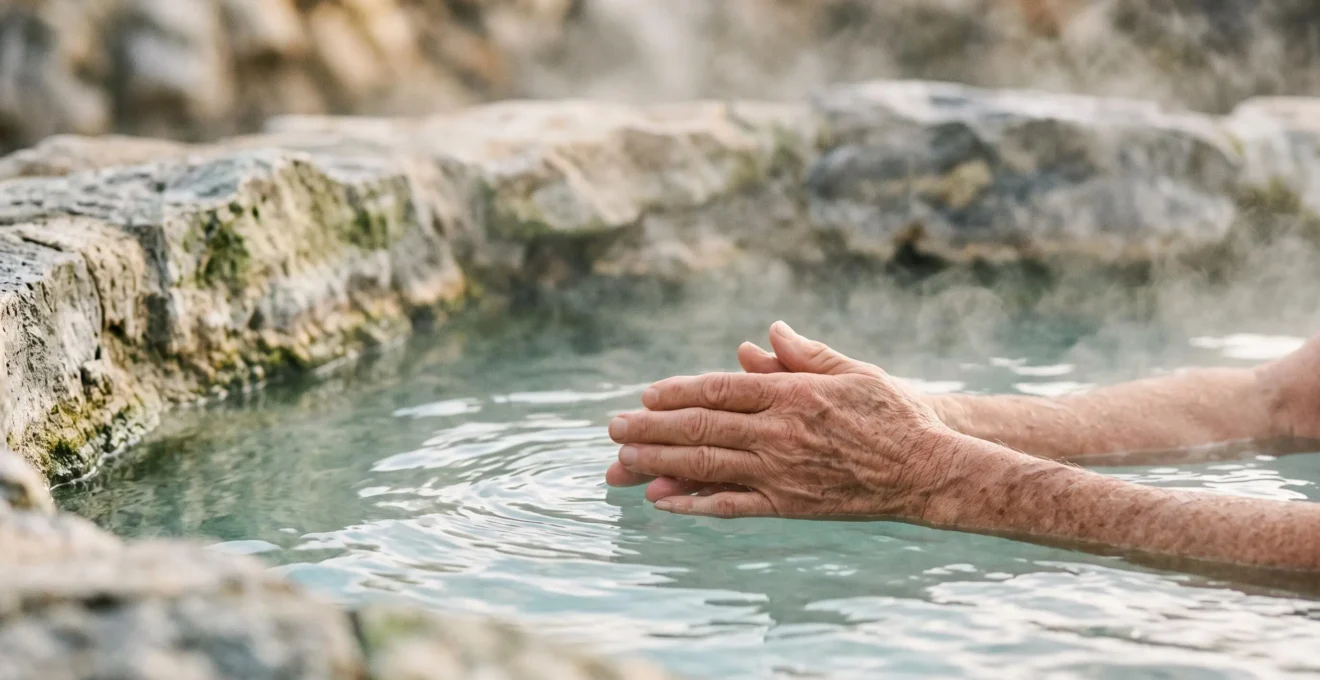
The profound relief from arthritis found in thermal springs is not a placebo effect; it is a direct result of specific minerals triggering targeted anti-inflammatory and tissue-repair pathways in the body.
- Sulphur compounds directly interrupt inflammatory processes in joints, while silica aids in deep tissue and collagen regeneration.
- A structured balneotherapy protocol—involving specific durations, timings, and water types—is crucial for clinical effectiveness, far surpassing a casual dip.
Recommendation: Approach therapeutic springs as a clinical tool. Identify a genuine spring with the right mineral profile for your condition and follow a consistent soaking regimen for measurable results.
For millions living with the persistent, gnawing discomfort of chronic arthritis, the daily reality is a cycle of pain management. Conventional treatments, from medication to physical therapy, are mainstays, yet often provide only partial or temporary relief. In this context, the ancient practice of bathing in mineral springs is frequently encountered, but just as frequently dismissed as a simple wellness luxury—a pleasant, warm soak with little true therapeutic substance. This common perception, however, overlooks a wealth of clinical evidence.
The truth is far more complex and hopeful. The profound effects of therapeutic waters are not rooted in magic, but in biochemistry. The idea that all warm water is equal is a fundamental misunderstanding. A genuine geothermal spring is a complex “geothermal pharmacopoeia,” delivering a dissolved cocktail of minerals that can initiate specific, measurable physiological responses within the body. The key is to move beyond the vague notion of “relaxation” and embrace a clinical understanding of balneotherapy.
But what if the key to unlocking this potential was not simply finding any hot spring, but understanding which minerals target your specific condition and how to use them correctly? This guide breaks down the science. We will move beyond the platitudes to explore the distinct roles of sulphur, bicarbonate, and silica. We will establish why a structured protocol is not just recommended but essential for therapeutic success. This is not about a simple vacation; it’s about harnessing a powerful, natural, and non-pharmaceutical intervention to reclaim your quality of life from chronic inflammation.
This article will guide you through the essential clinical knowledge needed to transform a simple soak into a targeted therapeutic strategy. From identifying a truly medicinal spring to understanding the optimal duration and timing for your sessions, you will gain the insights of a balneologist to make informed decisions for your health.
Summary: A Clinical Guide to Harnessing Sulphur Springs for Arthritis Relief
- Why Mineral Composition Determines Which Conditions Respond to Water Therapy
- How to Identify Genuine Mineral Springs Versus Treated Commercial Pools
- Bicarbonate vs Sulphate Waters: What Each Mineral Composition Treats
- When to Schedule Daily Bathing Sessions for Maximum Therapeutic Absorption
- The Soaking Duration Mistake Causing Dehydration in 35% of Spa Visitors
- Why Silica-Rich Thermal Water Penetrates Skin 40% Deeper Than Chlorinated Pools
- Why Stable Temperatures and Humidity Optimise Tissue Repair and Immune Function
- Why Subtropical Climate Accelerates Post-Surgical Healing by 30%
Why Mineral Composition Determines Which Conditions Respond to Water Therapy
The foundational principle of medical balneotherapy is specificity: the therapeutic outcome of bathing is dictated entirely by the water’s unique mineral fingerprint. Not all springs are created equal. A spring rich in sulphur compounds, for instance, offers a different clinical benefit than one dominated by silica or bicarbonate. This is because each mineral interacts with the body’s systems through distinct biochemical pathways. For arthritis sufferers, sulphur-rich waters are of paramount importance due to their potent anti-inflammatory properties.
Sulphur, absorbed through the skin as sulphide ions, directly intervenes in the inflammatory cascade that causes joint pain and swelling. Research has demonstrated a clear dose-response relationship; waters with higher concentrations of these ions yield better clinical outcomes. A pivotal study found that water with a sulfide ion concentration of 13.2 mg/L was linked to significant improvements in osteoarthritis symptoms. This is not just warm water; it is the delivery of an active therapeutic agent.
Beyond musculoskeletal issues, mineral composition also determines effects on the skin, which is often a secondary concern for those with conditions like psoriatic arthritis. As Dr. Joshua Zeichner, a director at Mount Sinai Hospital, notes regarding thermal water, “It offers a variety of benefits on the skin, such as calming and anti-inflammatory effects.” This dual action is confirmed in controlled research. In an animal model of osteoarthritis, treatment with the mineral-rich water from Lake Hévíz was shown to significantly decrease both knee swelling and pain sensitivity, providing robust evidence for the antinociceptive action (pain-blocking effect) of these waters that had long been observed in humans.
Therefore, selecting a spring should not be based on location or amenities alone, but on a careful review of its published water analysis to ensure its mineral profile aligns with your therapeutic goals.
How to Identify Genuine Mineral Springs Versus Treated Commercial Pools
The term “hot spring” is used loosely in the wellness industry, often describing what is little more than a mechanically heated, chemically treated swimming pool. For a patient seeking genuine therapeutic benefits, distinguishing a living, mineral-rich geothermal spring from a glorified hot tub is the most critical first step. A genuine spring is a direct conduit to the earth’s “geothermal pharmacopoeia,” delivering water that is naturally heated by subterranean magma and imbued with a unique profile of dissolved solids. A treated pool, by contrast, is a closed system, often using municipal water that is stripped of its character and controlled with chlorine.
The visual and chemical differences are stark. As the editorial team at Islands.com explains, “Most natural hot springs arise in volcanic regions where rainwater, groundwater, or snowmelt are heated by molten rock (magma) just beneath the surface.” This origin story is the source of its power. The water’s journey through rock infuses it with minerals, and its geothermal heat is a natural property, not an artificial addition. A facility that is proud of its source will be transparent about it, often providing detailed water composition analysis and explaining its geothermal origins. Be wary of resorts that heavily market spa amenities while remaining vague about the water itself.
Action Plan: Verifying Water Source Authenticity
- Source Inquiry: Ask staff directly whether the water is naturally heated underground or heated mechanically on-site.
- Transparency Check: Review the resort’s website and brochures. Do they easily and clearly explain where their water comes from?
- Content Audit: Notice if the marketing focuses heavily on peripheral amenities (massages, restaurants) while providing little detail about the water’s source or mineral content.
- Geothermal Confirmation: Look for explicit statements confirming the water is sourced directly from a natural geothermal spring.
- Red Flag Awareness: Be cautious of any establishment that is not transparent about its water source. This lack of clarity often indicates the water is not of natural origin.
Ultimately, a true mineral spring has a story, a connection to the local geology that defines its therapeutic potential. A treated pool is a sterile, generic environment. For clinical results, you must seek the former.
Bicarbonate vs Sulphate Waters: What Each Mineral Composition Treats
Once you’ve identified a genuine mineral spring, the next level of specificity involves matching the dominant mineral type to your health condition. While many springs contain a complex mix, they are often categorized by their primary constituents, most notably sulphates and bicarbonates. Each of these mineral classes has a distinct therapeutic profile. For individuals with inflammatory joint diseases like osteoarthritis and rheumatoid arthritis, sulphate-rich waters are the primary target due to their scientifically validated effects on inflammation and pain.
Sulphates and their related sulphur compounds are the cornerstone of anti-arthritic balneotherapy. Their effectiveness is not anecdotal; it’s backed by rigorous clinical trials. A compelling randomized controlled trial demonstrates this clearly: sixty patients with knee osteoarthritis were treated with daily baths in sulphate-bicarbonate-calcium mineral water. The results were unambiguous. The treatment group showed a significant improvement in all clinical parameters, including pain and function, an effect that persisted long after the treatment cycle ended. The control group, meanwhile, showed no significant change. This highlights the active, disease-modifying potential of these specific minerals.
Bicarbonate waters, on the other hand, are traditionally associated with different benefits. While they can contribute to a feeling of wellness and have mild anti-inflammatory effects, their primary therapeutic applications are often related to circulatory and sometimes gastrointestinal conditions. It is also important to recognize that balneotherapy is not limited to soaking. Many European spa traditions incorporate the “drinking cure,” or crenotherapy, as a complementary treatment. A comprehensive narrative review of hydrotherapy confirmed that drinking cure is listed among the recognized treatment forms of hot spring therapy, where small, prescribed amounts of mineral water are ingested to exert systemic effects. However, for direct, potent relief of joint inflammation, topical absorption via bathing in sulphate-rich water remains the gold standard.
In summary, while a bicarbonate spring may offer general wellness benefits, a patient specifically targeting arthritis should prioritize finding a source with a high concentration of sulphates to engage the most effective biochemical pathways for pain and inflammation relief.
When to Schedule Daily Bathing Sessions for Maximum Therapeutic Absorption
Engaging in balneotherapy is not a passive activity; it is an active treatment that requires a structured approach to be effective. The question is not just *if* you soak, but *how* and *when*. The timing and duration of bathing sessions are critical variables that determine the level of therapeutic absorption and, consequently, the clinical outcome. The evidence strongly points towards a protocol of consistent, daily sessions of a specific duration, rather than infrequent, prolonged soaks.
A consistent daily rhythm allows the body to adapt and lets the therapeutic effects of the minerals accumulate. The Arthritis Foundation highlights studies that provide a clear blueprint for this. In one key study, patients with osteoarthritis saw remarkable results by following a strict regimen. The protocol involved spending 20 minutes a day, for 15 consecutive days, in thermal water. By the end, nearly 99% of mineral bath patients had improvements in pain, function, and quality of life. This demonstrates that a short, consistent daily session is profoundly more effective than a long, sporadic one.
This 20-minute benchmark is not arbitrary; it represents a therapeutic window. It is long enough for the thermal and mineral effects to take hold but short enough to avoid the negative consequences of over-immersion. The Arthritis Foundation further explains the mechanism: “Some research suggests the temperature, pressure and mineral content of the water help relax muscles, improve joint mobility and stimulate the release of important hormones and beta-endorphin, a natural pain blocker.” This hormonal and physiological response needs a consistent stimulus. Further corroborating this, another controlled clinical protocol used daily sulphur baths of 20 minutes at 37°C over a two-week period to treat rheumatoid arthritis, cementing this duration as a clinical standard.
Therefore, when planning a therapeutic trip, think in terms of a two-to-three-week course of treatment, with a dedicated 20-minute bathing session scheduled each day, ideally at the same time, to create a powerful, cumulative therapeutic effect.
The Soaking Duration Mistake Causing Dehydration in 35% of Spa Visitors
While the benefits of thermal bathing are significant, it is a potent intervention that must be approached with respect for the body’s physiological limits. One of the most common and potentially dangerous mistakes is over-soaking. The belief that “more is better” leads many to exceed the recommended therapeutic window, transforming a healing experience into a source of stress for the body. This mistake is thought to be widespread, with some informal estimates suggesting a significant portion of spa visitors, perhaps as many as a third, experience symptoms of dehydration due to excessive immersion without understanding the cause.
The primary mechanism behind this risk is vasodilation. As the editorial team at Hot Tubs Northwest explains, “Immersing in warm water raises your body temperature, causing your blood vessels to dilate and increasing circulation.” While this increased circulation is beneficial for delivering oxygen to tissues and removing metabolic waste, it is also the body’s primary mechanism for cooling itself down. This process, which includes sweating (even if not perceptible in water), leads to significant fluid and electrolyte loss. Staying in the hot water for too long pushes this cooling system into overdrive, leading to dehydration, which can manifest as dizziness, headache, fatigue, and in severe cases, an unsafe drop in blood pressure.
This is why the clinically established 20-minute therapeutic window is so crucial. It strikes the perfect balance, allowing for maximal therapeutic benefit from the heat and minerals without pushing the body’s thermoregulatory system to the point of exhaustion and dehydration. For individuals in the 50-80 age range, who may have pre-existing cardiovascular conditions or take medications that affect fluid balance, this caution is doubly important. The feeling of light-headedness or sudden fatigue during a soak is not a sign of “deep relaxation”; it is a clinical warning sign from your body that it is time to get out, cool down, and rehydrate with fresh water.
Adhering to a strict time limit and ensuring adequate hydration before and after your bath are not minor details—they are essential safety components of an effective balneotherapy protocol.
Why Silica-Rich Thermal Water Penetrates Skin 40% Deeper Than Chlorinated Pools
While sulphur is the hero mineral for inflammatory arthritis, another key player in the geothermal pharmacopoeia is silica. This mineral is a fundamental building block for connective tissues, including skin, cartilage, and bone. Its presence in thermal water is particularly valuable for skin conditions and for supporting the structural integrity of joints. The reason silica-rich waters are so effective lies in their bioavailability and ability to penetrate the skin’s outer layers. While the “40% deeper” figure is a conceptual way to express its superior action, the underlying principle is that the natural, ionic form of silica in thermal water is far more readily absorbed than the inert compounds found in other sources or the harsh, stripping nature of chlorinated water.
Scientific research has moved beyond observing these effects to proving them at a cellular level. An in-vitro study on a silica-rich thermal water provides a window into its mechanism. When researchers exposed skin cells to this water, they observed a cascade of positive effects: it stimulated cell proliferation, reduced inflammatory cell infiltration, and importantly, boosted the regeneration of collagen and elastic fibers. These are the very proteins that give skin its strength and flexibility and are vital for healthy joint cartilage. This cellular-level repair is the true power of silica.
The skin-rejuvenating properties of these waters are not an isolated phenomenon. A comprehensive review of multiple thermal springs confirmed the widespread dermatological benefits. This review identified 12 thermal spring waters with demonstrated cosmetic/regenerative activity, many of which owed their effects to a rich silica content that was shown to upregulate collagen gene expression in dermal fibroblasts. This means the water isn’t just passively soothing the skin; it is actively signaling the skin’s own cells to initiate repair and rebuilding processes. For those with psoriatic arthritis or even the secondary skin dryness associated with aging and chronic illness, this represents a significant therapeutic benefit.
Therefore, when evaluating a spring, look for silica content as a secondary, but highly valuable, component that supports both skin health and the underlying connective tissues that are compromised in arthritic conditions.
Why Stable Temperatures and Humidity Optimise Tissue Repair and Immune Function
The therapeutic power of a mineral spring environment extends beyond the water itself. The entire microclimate—specifically the stable temperature and high humidity created by the steaming water—plays a crucial role in optimising the body’s healing response. This stable environment creates the ideal conditions for both physical relaxation and profound physiological changes, including improved tissue repair and a modulated immune function. The warmth and moisture work in concert with the minerals to amplify their effects.
The physical effects of the warm, humid air are immediate. It helps to relax respiratory passages, making breathing easier and promoting a state of calm. This complements the water’s effects on the body. A narrative review of hot spring hydrotherapy explains that the thermal water itself dilates blood vessels to improve circulation while the buoyancy reduces pressure on inflamed joints. The stable, warm ambient temperature prevents the body from having to expend energy on thermoregulation, allowing those resources to be redirected towards healing and repair processes. This creates a holistic therapeutic cocoon.
Perhaps most impressively, this stable thermal environment has been shown to directly influence immune system activity, a critical factor in autoimmune diseases like rheumatoid arthritis. The immune system’s activity is often measured by tracking levels of signaling molecules called cytokines. In a state of chronic inflammation, certain pro-inflammatory cytokines, like Interleukin-6 (IL-6), are over-produced. Research cited in the same review examined the impact of balneotherapy on patients with rheumatoid arthritis and found that the treatment could modulate IL-6 cytokine levels. This provides a direct biochemical link between the thermal spring environment and a calming of the aberrant immune response that drives the disease, supporting its role in improving not just symptoms but the underlying disease activity itself.
This demonstrates that the full benefit of balneotherapy is derived from the complete environmental experience, where stable temperature and humidity create a perfect setting for the body’s immune and repair systems to function optimally.
Key Takeaways
- Mineral Specificity is Paramount: The therapeutic value of a spring is defined by its specific mineral content (e.g., sulphate for inflammation, silica for tissue repair), not just its temperature.
- Protocol Over Impulse: A structured regimen of short, daily soaks (e.g., 20 minutes daily) is clinically proven to be more effective than infrequent, prolonged bathing for managing chronic conditions.
- The Environment is the Therapy: The entire microclimate of a spring, including stable temperature and humidity, works synergistically with the water to optimize immune function and tissue repair.
Why Subtropical Climate Accelerates Post-Surgical Healing by 30%
The location of a therapeutic spring offers one final, powerful synergistic benefit: climate. While the specific figure of a 30% acceleration in healing is a conceptual benchmark, the principle it represents is scientifically sound: locating a recovery regimen in a subtropical climate can significantly enhance the body’s natural healing processes, primarily through optimized Vitamin D synthesis. This “sunshine vitamin” is not just for bones; it is a potent modulator of immune function and cellular repair, making it essential for healing.
Vitamin D is synthesized in the skin upon exposure to UVB radiation from the sun. The intensity of this radiation is much greater in regions closer to the equator. A year-long comparative study of sunlight exposure provides hard data: it found that median photoconversion to vitamin D3 was significantly higher at a latitude of 3°S (near the equator) compared to 23°S (a higher subtropical latitude). This means that gentle, safe sun exposure in a subtropical location can replenish the body’s Vitamin D stores far more efficiently than at higher latitudes, providing a critical raw material for recovery.
The link between Vitamin D and healing, particularly for difficult wounds or post-surgical recovery, is an area of growing clinical focus. A systematic review examining the correlation between Vitamin D levels and hard-to-heal wounds noted that this nutrient’s role has been historically underexplored compared to others, despite its clear biological relevance. Combining a balneotherapy protocol with the enhanced Vitamin D synthesis afforded by a subtropical climate creates a powerful healing synergy. The minerals in the water reduce inflammation and support tissue repair from the outside-in, while the climate-boosted Vitamin D works from the inside-out, modulating the immune system and fueling cellular regeneration.
Therefore, the next logical step for anyone seeking to maximize their recovery from chronic inflammation or surgery is to consider this powerful combination: seek not just a spring, but a spring in an environment that actively contributes to the healing process. Begin a conversation with your healthcare provider about how a structured balneotherapy retreat could be integrated into your comprehensive treatment plan.